 Leafprint
Multi-location operators
Compare interest across stores and states
When you run several stores, the question shifts from who visited to where demand is and how each market differs. Multi-state operators also have more rules to keep straight.
A view across locations
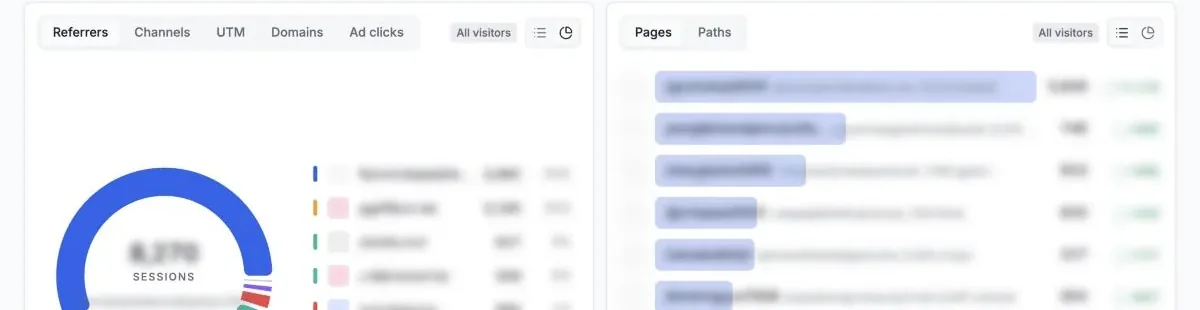
Location pages tell you a lot. When identified visitors keep reading about one store, that points to interest in that trade area. Comparing pages side by side can help you decide where to focus local promotions and which stores need more attention.
Approximate location adds another angle, showing whether a store's page attracts people nearby or people from farther away who may be good candidates for a future site.
Rules change at the state line
What is fine in one market may not be fine in another. Cannabis advertising rules, privacy laws, and text message requirements all differ. A central marketing team needs to keep a clear record of what applies where, and should not roll a single playbook out across every state.
A practical setup is a simple matrix covering each state you operate in: what your counsel approved, which channels are allowed, what your privacy notice says, and who handles deletion requests. Update it when rules change, and review it before each new market launch.
Who sees what
With more people involved, control matters more. Decide who at headquarters and who at each store should have access to profile data. Store teams often just need page trends and a summary. Limiting access to personal information reduces your risk and your training burden.
Sending data to a central system
Larger groups often already have a data warehouse or a customer data system. Webhooks can send records there, so identification data sits beside your other reporting. Tag records with their market so that state-specific rules can be applied downstream, and make sure opt-outs reach everywhere the data has gone.
Where to start
Do not launch everywhere at once. Pick one or two markets where your counsel is comfortable and your team is ready. Run the pixel, build the reporting habit, and document what you learn. Then expand with that playbook, adapting it to each state.
This also makes a useful internal test. If a pilot market shows you something you can act on, such as an underused store page or a channel that delivers few local people, you will have a real example to take to the rest of the leadership team.
Using it for new store decisions
Treat location data as one input among many. It can show where interest is coming from, but licensing, real estate, and competition will weigh much more heavily in a site decision. Use it to ask better questions, not to make the call on its own.
Common questions
Should we roll out to every state at once?
We suggest starting with one or two markets. That gives you a chance to confirm legal review, build the reporting habit, and adapt the playbook before you expand.
Can store managers see profile data?
Decide this based on need. Many store teams only need page trends and summaries, and limiting access to personal information reduces risk.
How do we handle state differences?
Keep a simple matrix of what counsel approved in each state, including channels, privacy language, and who handles requests. Review it before each launch.
See it on your own traffic
We will walk through the portal, the pixel, and how consent works, then answer questions about your stores and systems.