 Leafprint
Visitor identification
Turn anonymous sessions into profiles you can review
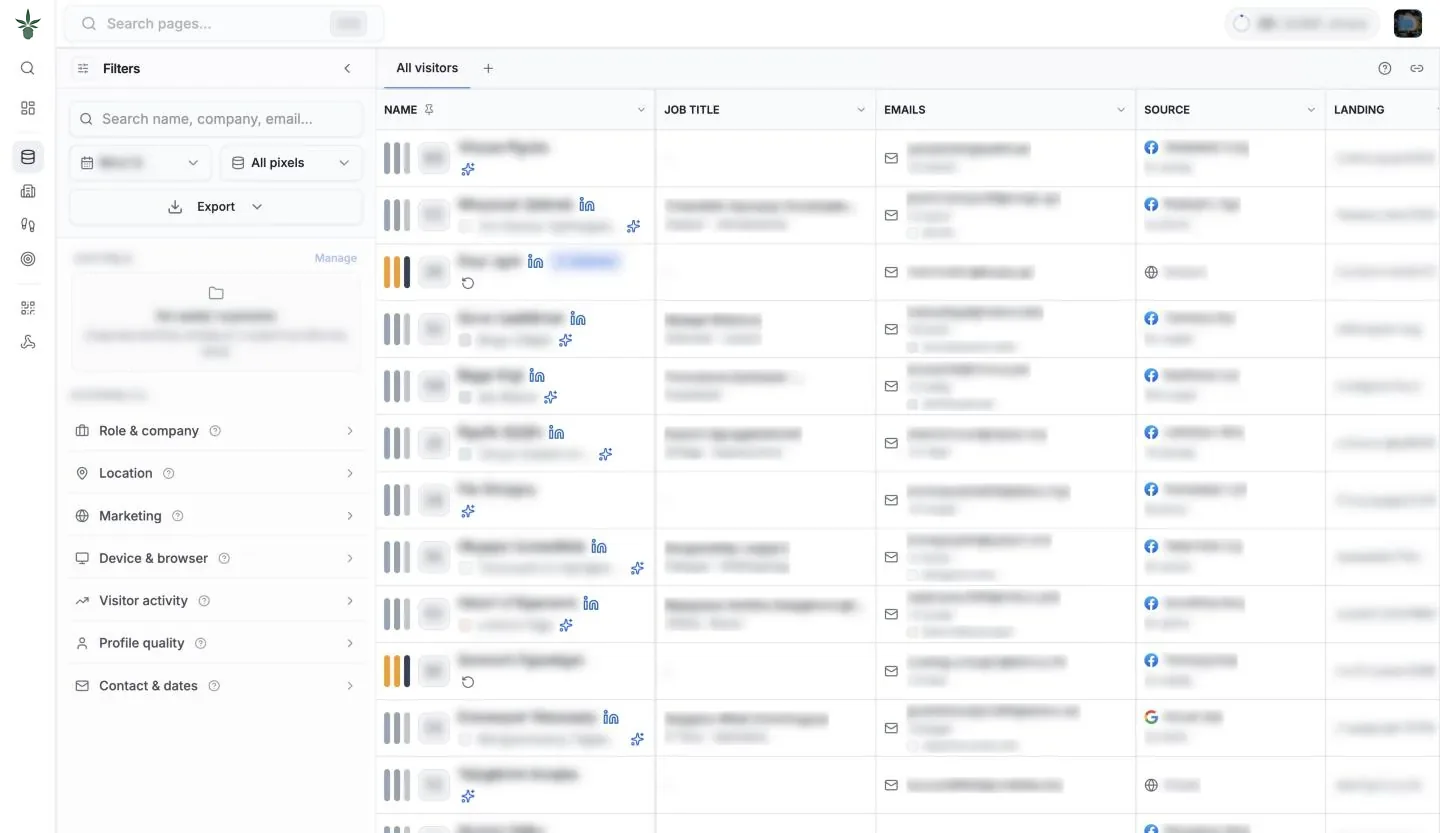
Visitor Data is the part of the portal most teams open first. It lists the individual people the pixel was able to match, along with what they did on your site.
What gets recorded
The pixel records activity on your site, whether or not a match happens later. That activity includes:
- Pages viewed
- Clicks
- Scrolling
- Video plays
- Form submissions
- Text copied
- Referring source
- IP address
- Device and browser
- Approximate location
- Time zone
What a match can add
A visit may be matched to information held by data providers. When a match exists, the profile can include:
- Name
- Email addresses
- Phone numbers
- Age range
- Job title
- Company
- Location
Not every field appears on every profile, and not every visit matches. Treat match data as useful but imperfect, and verify anything important before you rely on it.
Why this matters in cannabis
Cannabis retailers have fewer paid channels than most industries, so each earned visit counts for more. Someone comparing your menu to a competitor's may never join your loyalty program or fill out a form. Without identification, that interest disappears the moment they close the tab.
With a profile, you can see that a real person looked at your deals page twice this week, came from a search, and lives near your store. That changes how you read your traffic.
Good ways to use Visitor Data
- Check who your campaigns attract. Compare the profiles arriving from each source with the customers you actually want.
- Find content that draws real interest. See which pages identified visitors keep returning to, then make those pages better.
- Follow up where you are allowed to. If a contact has given you consent through your own signup, a match helps you understand their interests. For everyone else, review your options under the rules that apply to you.
- Send records to other systems. Use webhooks to pass profiles along for review.
What not to do
Do not load matched phone numbers into an SMS list and start sending. A match is not consent, and treating it that way puts your program and your sending number at risk. Read why a phone match is not SMS consent before you plan any outreach.
You should also tell people what you are doing. Your privacy policy should disclose that you use a visitor identification pixel and explain how someone can opt out or request deletion. See our compliance guidance for what to cover.
Common questions
How accurate are the matches?
Match data comes from third-party providers, so quality varies by record. We do not publish an accuracy figure. Spot-check profiles against customers you know, and verify anything you plan to act on.
Does a visitor have to fill out a form?
No. The pixel can attempt a match without a form submission. That is why disclosure in your privacy policy matters, because the visitor has not handed you the information directly.
Can a visitor opt out?
They should be able to. Your privacy policy should explain how to opt out or request deletion, and your team needs a process for honoring those requests.
See it on your own traffic
We will walk through the portal, the pixel, and how consent works, then answer questions about your stores and systems.